Why doesn't a woodpecker get a concussion?
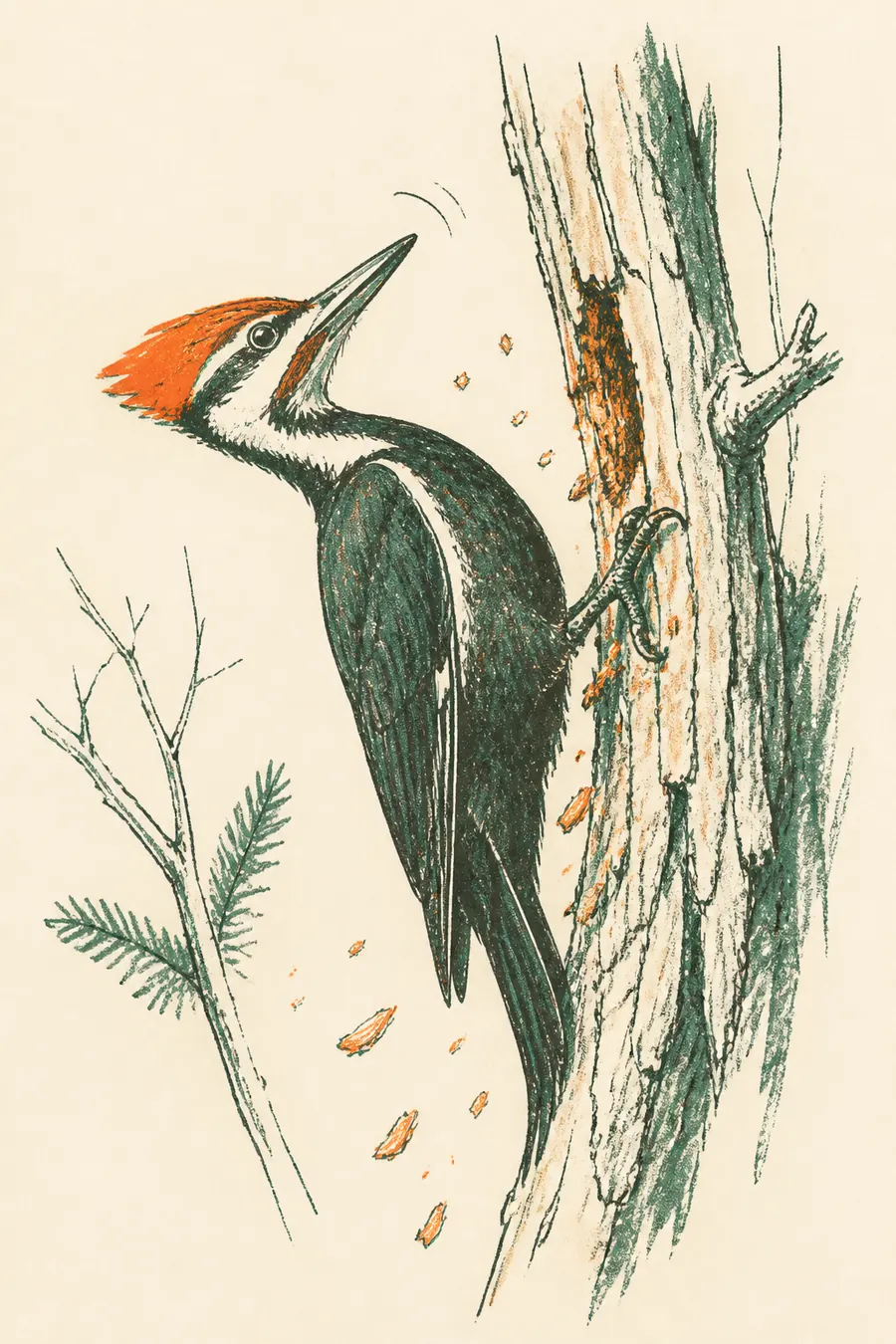
For years the standard answer was that its skull works like a helmet: spongy bone that soaks up each hit. It's a tidy story, and engineers borrowed it for shock-absorbing gear.
Then in 2022 a team led by Sam Van Wassenbergh filmed three woodpecker species at high speed and measured how fast their heads stop. The skull doesn't cushion much of anything. It acts like a stiff hammer, which makes sense if you think about it. If you're driving a nail, you don't tape a pillow to the hammer.
So why no concussion? Size. A small brain in a small skull feels far less pressure from the same sudden stop. By the team's numbers, a woodpecker would have to hit about twice as fast as it does, or peck wood four times stiffer, before it got into concussion territory.
Source: Van Wassenbergh et al., "Woodpeckers minimize cranial absorption of shocks," Current Biology 32 (2022).